Historic Fort · Middletown Township, Monmouth County
Fort Hancock
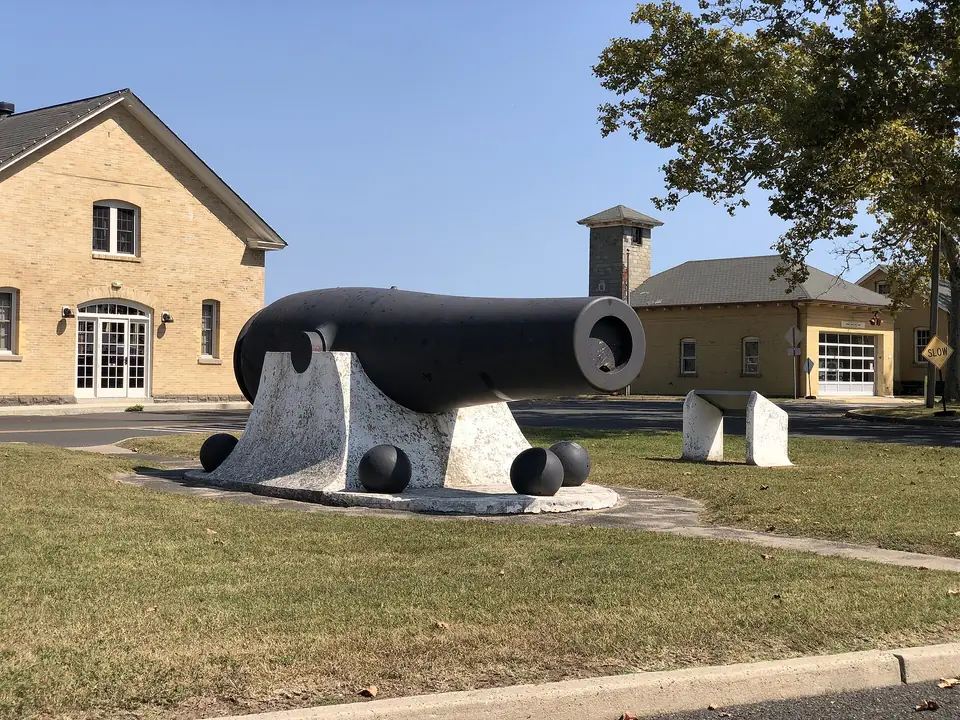
The army post that guarded New York harbor for a century, with a row of yellow-brick officers' houses, old gun batteries and a Nike missile site.
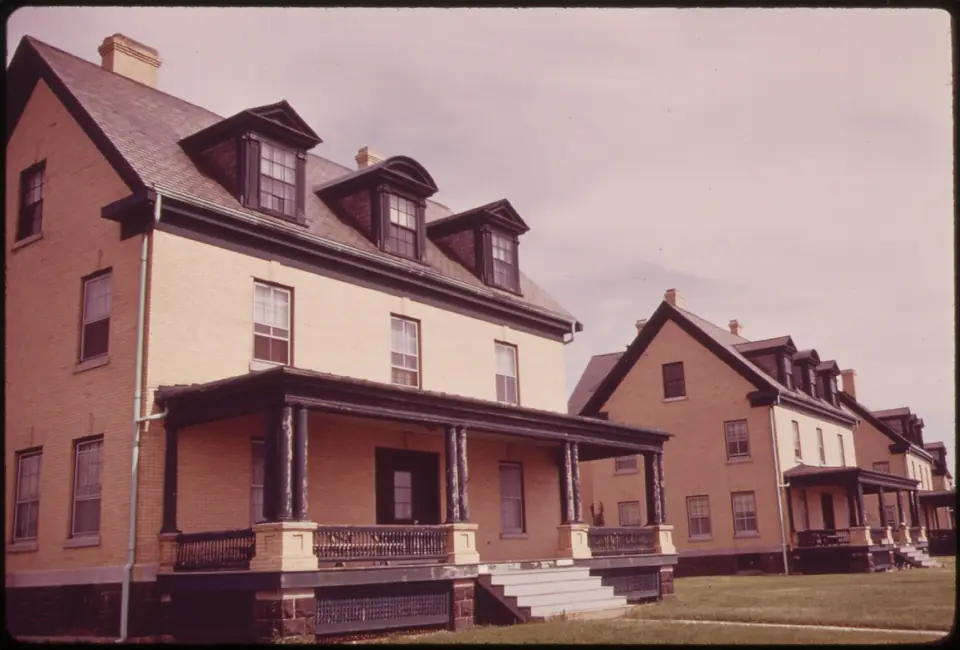
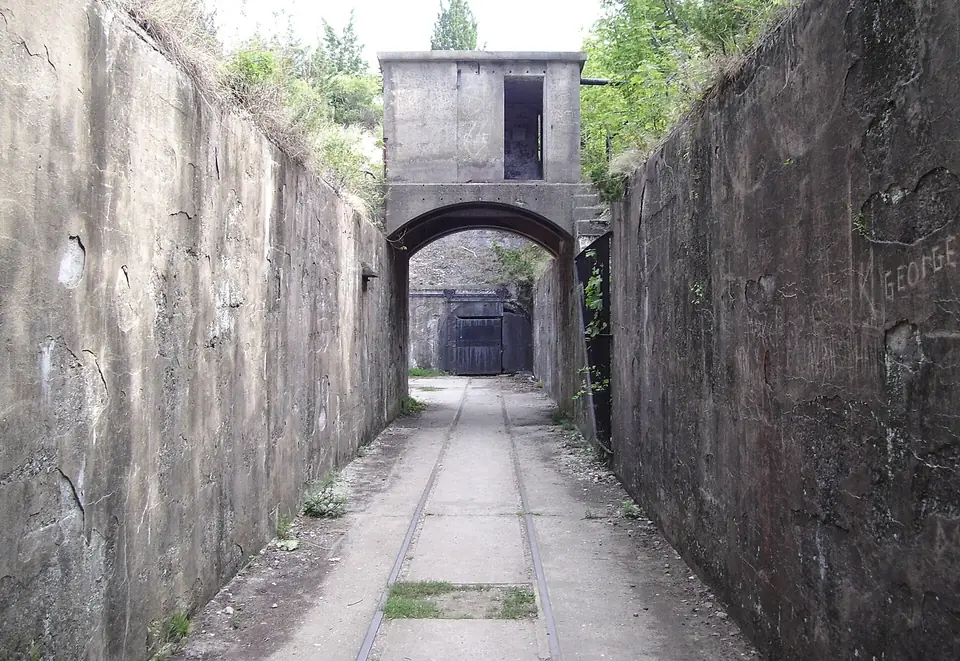
For a hundred years the army held the tip of Sandy Hook to guard the entrance to New York harbor. The soldiers have gone, but Fort Hancock is still there: a long row of yellow-brick officers' houses facing the bay, a parade ground, and massive concrete gun batteries half buried in the dunes on the ocean side.
The story
The army began testing guns here in 1874, at the Sandy Hook Proving Ground. In 1890 work started on Battery Potter, an experiment in raising heavy guns into firing position by steam-powered hydraulic lifts; it was the only one of its kind ever completed, and it was obsolete within a few years. The post was named Fort Hancock in 1895, after the Civil War general Winfield Scott Hancock, and from 1898 the army built its houses, barracks and the eighteen buff-brick homes of Officers' Row. The proving ground moved to Aberdeen, Maryland, in 1919, but the fort grew again in the Second World War, when more than 5,000 people served here, and from 1956 it guarded the harbor with Nike missiles. The army left in 1974, and the fort is now part of Gateway National Recreation Area and a National Historic Landmark.
Visiting
The grounds are open every day, and parking at Fort Hancock is free all year. Walk Officers' Row and the parade ground, then out to Battery Potter and Battery Gunnison (the second is opened only for tours). The History House, a lieutenant's home of 1898 furnished as it was in the Second World War, opens on weekend afternoons from May to mid-November, and the Fort Hancock Museum, in the old guardhouse and jail, on weekend afternoons from July to October. Some houses on Officers' Row are being restored by private tenants, so not every door is open. Allow two or three hours with the lighthouse.
The Army Ground Forces Association brings the fort to life with Coast Defense Days in May, lantern tours of the batteries, Fort Hancock Days in late October and a "1943 Christmas" in December. Leashed dogs may walk the paths and roads, but not enter buildings, and they are kept off the ocean beaches from March 15 to September 15.
Around town
The road off Sandy Hook lands in Highlands, a fishing town with seafood restaurants on the water, among them Bahrs Landing, there since 1917.
What you will find
- Dogs welcome
Plan your visit
- Era
- 1874 to 1974
- Designation
- National Historic Landmark district
- Known for
- Officers' Row, the coastal gun batteries and the Nike missile site
- Best time
- A weekend from May to mid-November, when the History House is open; after Labor Day for no beach fee
- Allow
- 2–3 hours with the lighthouse
- Tours
- History House and the museum self-guided on weekend afternoons in season; Battery Gunnison by tour only
- Good to know
- Parking at Fort Hancock is free all year; some Officers' Row houses are private
Make a day of it
In and around Fort Hancock
Lighthouse · Middletown Township, Monmouth County
Sandy Hook Lighthouse
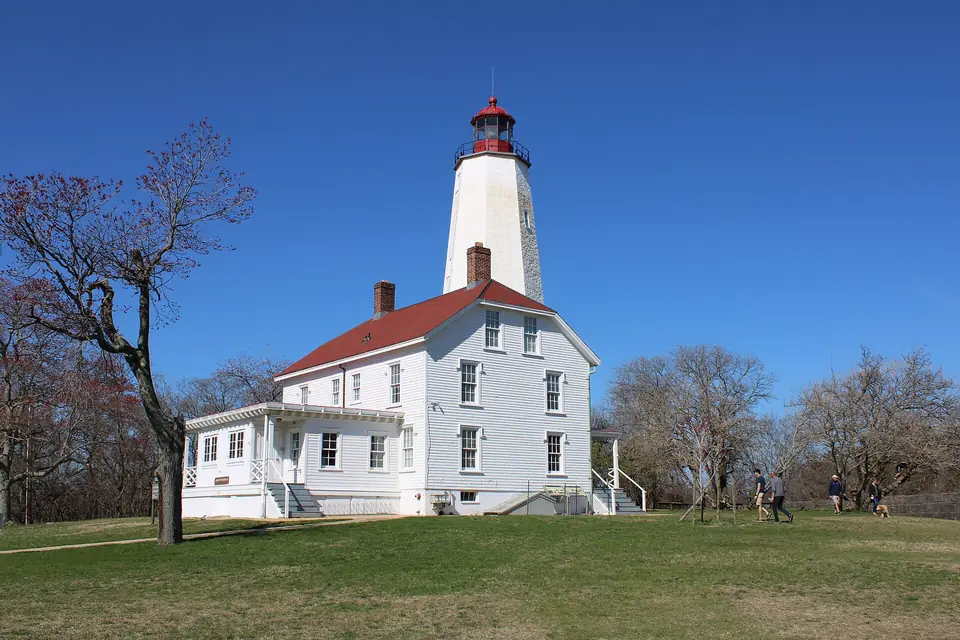
A few hundred yards away, the oldest working lighthouse in the country, older than the fort by more than a century.
Photo: Freeholdman12, CC BY-SA 4.0, via Wikimedia Commons
State Historic Site · Highlands Borough, Monmouth County
Twin Lights Lighthouse Historic Site
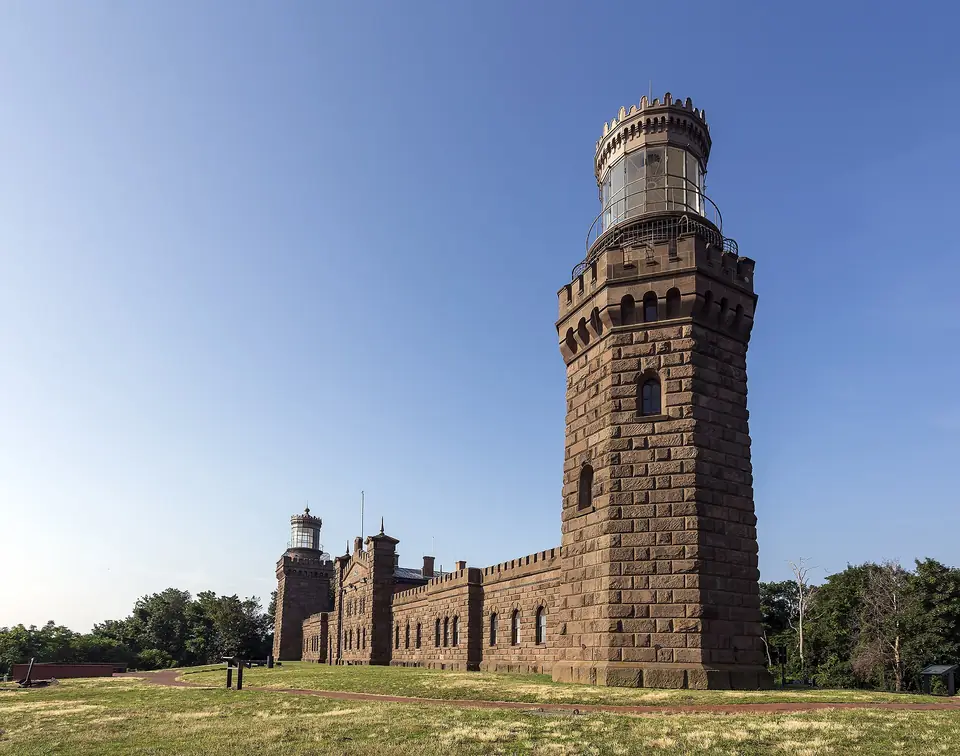
A brownstone lighthouse with two towers on the bluff above Sandy Hook Bay, with a museum of lighthouse history and wide views of the bay and harbor.
Photo: Acroterion, CC BY-SA 4.0, via Wikimedia Commons


Town · Red Bank Borough, Monmouth County
Red Bank
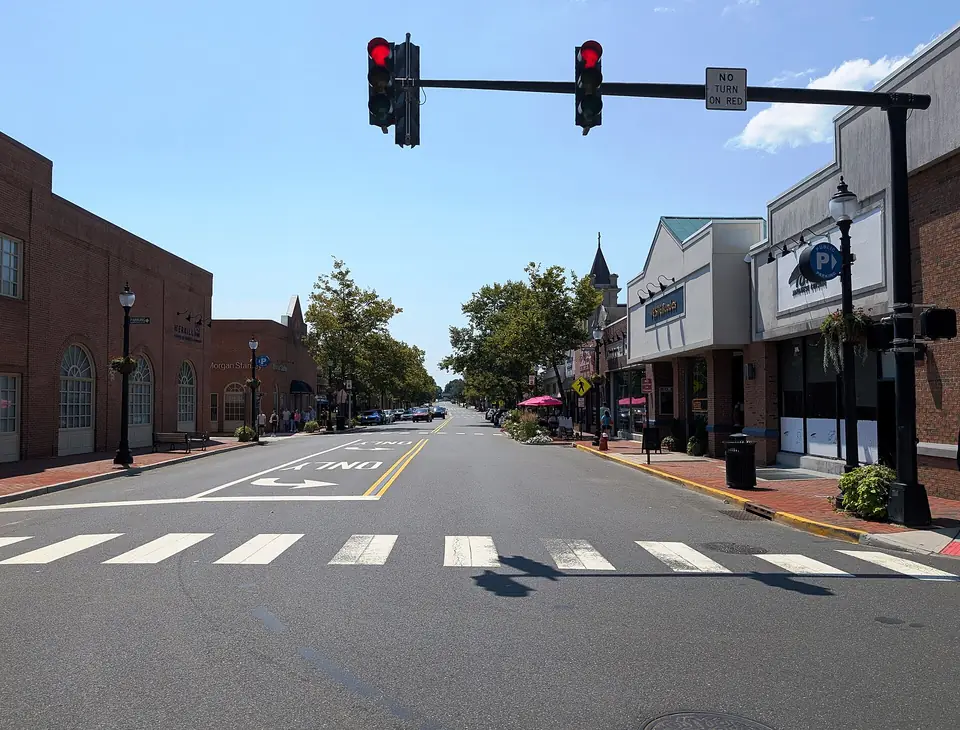
A lively town on the Navesink River with independent shops, restaurants, riverfront parks and two well-known theaters.
Photo: Mr. Matté (if there is an issue with this image, contact me using this image's Commons talk page , my Commons user talk page , or my English Wikipedia user talk page ; I'll know about it a lot faster), CC BY-SA 4.0, via Wikimedia Commons



Also nearby
Nearby
-
Sandy Hook Lighthouse
The oldest working lighthouse in the country, first lit in 1764, beside the old harbor-defense post of Fort Hancock on Sandy Hook.
-
Twin Lights Lighthouse Historic Site
A brownstone lighthouse with two towers on the bluff above Sandy Hook Bay, with a museum of lighthouse history and wide views of the bay and harbor.
-
Red Bank
A lively town on the Navesink River with independent shops, restaurants, riverfront parks and two well-known theaters.